


Professional Vinyl Flooring Transition Strips: Seamless Integration for Modern Interiors
In the world of modern flooring installations, achieving a flawless finish between different surfaces is paramount. Our premium vinyl flooring transition strips are engineered to provide that critical bridge, ensuring safety, aesthetics, and longevity. Designed for contractors, architects, and wholesale distributors, these strips offer the perfect solution for managing height differences and material changes in commercial, residential, and institutional projects. As a cornerstone of professional installation, they transform potential problem areas into features of seamless design.
Product Overview
Our vinyl flooring transition strips are high-performance molding profiles specifically crafted to create smooth, safe, and visually appealing transitions between vinyl flooring and adjacent surfaces. Whether connecting vinyl planks to carpet, tile, hardwood, or managing transitions between rooms or at doorways, these strips are indispensable. Manufactured from durable alloys and composites with sophisticated finishes, they are built to withstand high foot traffic while maintaining their elegant appearance. This product line is essential for completing any flooring project with a professional-grade finish.
Key Features
- Durable Construction: Made from high-grade aluminum, brass, or PVC composites, offering exceptional resistance to wear, corrosion, and impact.
- Safety-First Design: Features low-profile, beveled edges to eliminate tripping hazards and create a smooth walking surface.
- Versatile Compatibility: Engineered to accommodate various height differentials, perfectly bridging vinyl flooring with other common floor coverings.
- Easy Installation: Designed for quick and secure installation with pre-drilled holes for screw-down models or compatible with hidden clip systems for a clean look.
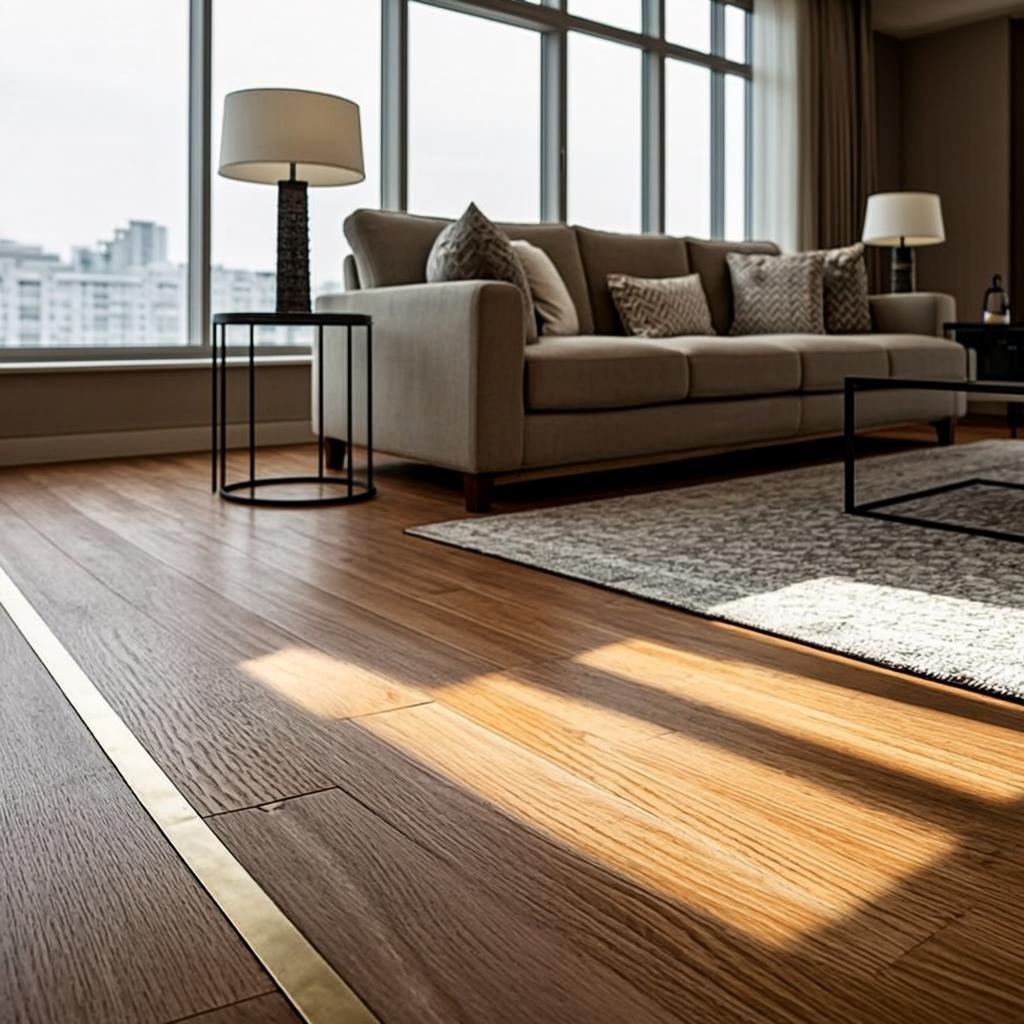
- Aesthetic Range: Available in a wide spectrum of finishes including brushed nickel, matte black, gold, and woodgrain patterns to complement any interior design scheme.
- Protective Function: Shields the exposed edges of vinyl flooring from curling, fraying, and moisture ingress, extending the floor's lifespan.
Technical Specifications
| Specification | Details |
|---|---|
| Material | Anodized Aluminum / Brass / Durable PVC |
| Standard Lengths | 0.9m (3ft), 1.8m (6ft), 2.7m (9ft) |
| Height Coverage Range | 3mm to 25mm (1/8" to 1") |
| Width | 50mm (2") Standard |
| Finishes | Brushed Nickel, Satin Black, Champagne Gold, Oak, Walnut, Grey |
| Installation Method | Screw-Down, Adhesive, or Hidden Clip System |
| Load Rating | Suitable for Heavy Commercial Traffic |
| Packaging | Individual Poly Sleeves, Bulk Carton (20-50 pcs) |
Application Scenarios
The correct application of vinyl flooring transition strips is critical across diverse environments. In commercial spaces such as retail stores, offices, and hospitals, they manage transitions between open floor areas and entryways, creating safe pathways. In residential projects, they are used at bedroom and bathroom doorways where vinyl meets carpet or tile. Educational institutions utilize them in hallways between classrooms and common areas. They are also essential in modular and floating floor installations to allow for necessary expansion and contraction. Effectively, anywhere two different floorings meet or a change in elevation occurs, a quality transition strip is required.
Advantages
- Enhanced Project Value: A professional finish with high-quality transition strips elevates the overall perceived quality and value of the flooring installation.
- Long-Term Cost Savings: By protecting vulnerable vinyl edges from damage, these strips reduce maintenance costs and extend the time between floor replacements.
- Code Compliance & Safety: Helps meet building code requirements for smooth transitions, reducing liability from trip-and-fall incidents.
- Design Flexibility: The variety of finishes allows designers to either seamlessly blend the transition or use it as a deliberate design accent.
- Streamlined Installation: Saves time and labor costs on-site with user-friendly installation systems, speeding up project completion.
Why Choose Our Vinyl Flooring Transition Strips
Selecting the right supplier for transition moldings is as important as the product itself. We distinguish ourselves through an unwavering commitment to quality and partnership. Our products undergo rigorous quality control to ensure precise dimensions, consistent finishes, and structural integrity. We offer extensive customization, including custom lengths, colors, and logos for large B2B orders. Our global logistics network ensures reliable, timely delivery to your warehouse or job site. Furthermore, our technical support team is available to assist with specification guidance, ensuring you select the perfect vinyl flooring transition strips for every unique application in your project portfolio.
Frequently Asked Questions (FAQ)
Q1: How do I choose the right height for a transition strip?
A: Accurately measure the height difference between the two flooring surfaces. Choose a strip whose height coverage range encompasses this measurement. It's always advisable to select a strip that slightly exceeds the difference for optimal performance.
Q2: Are these transition strips suitable for use with waterproof vinyl plank (WPC/SPC) flooring?
A: Absolutely. Our metal and waterproof PVC profiles are perfectly compatible with all types of luxury vinyl tile (LVT) and plank, including rigid core varieties. They help maintain the integrity of the flooring's waterproof claims at transition points.
Q3: What is the difference between screw-down and reducer-style transition strips?
A: Screw-down strips (T-moldings) are typically used where two floors of equal height meet. Reducer strips are ramped and are designed to transition from a higher floor (like vinyl) to a lower one (like carpet). Our range includes both types to suit all needs.
Q4: Can I order custom colors or finishes for a large project?
A: Yes. We specialize in fulfilling bulk B2B orders with custom requirements. Minimum order quantities apply for custom powder-coating or anodizing to match specific design palettes.
Q5: What tools are needed for installation?
A: Installation is straightforward. For screw-down types, you typically need a drill, screws, and a saw (hacksaw or miter saw) for cutting. For adhesive types, a strong flooring adhesive and a cutting tool are sufficient. Hidden clip systems require the corresponding clip channel to be installed first.